


The 'Bonissima' of Modena, a statue still standing today
of mysterious inspiration...
STATUE
THE BEAUTIFUL
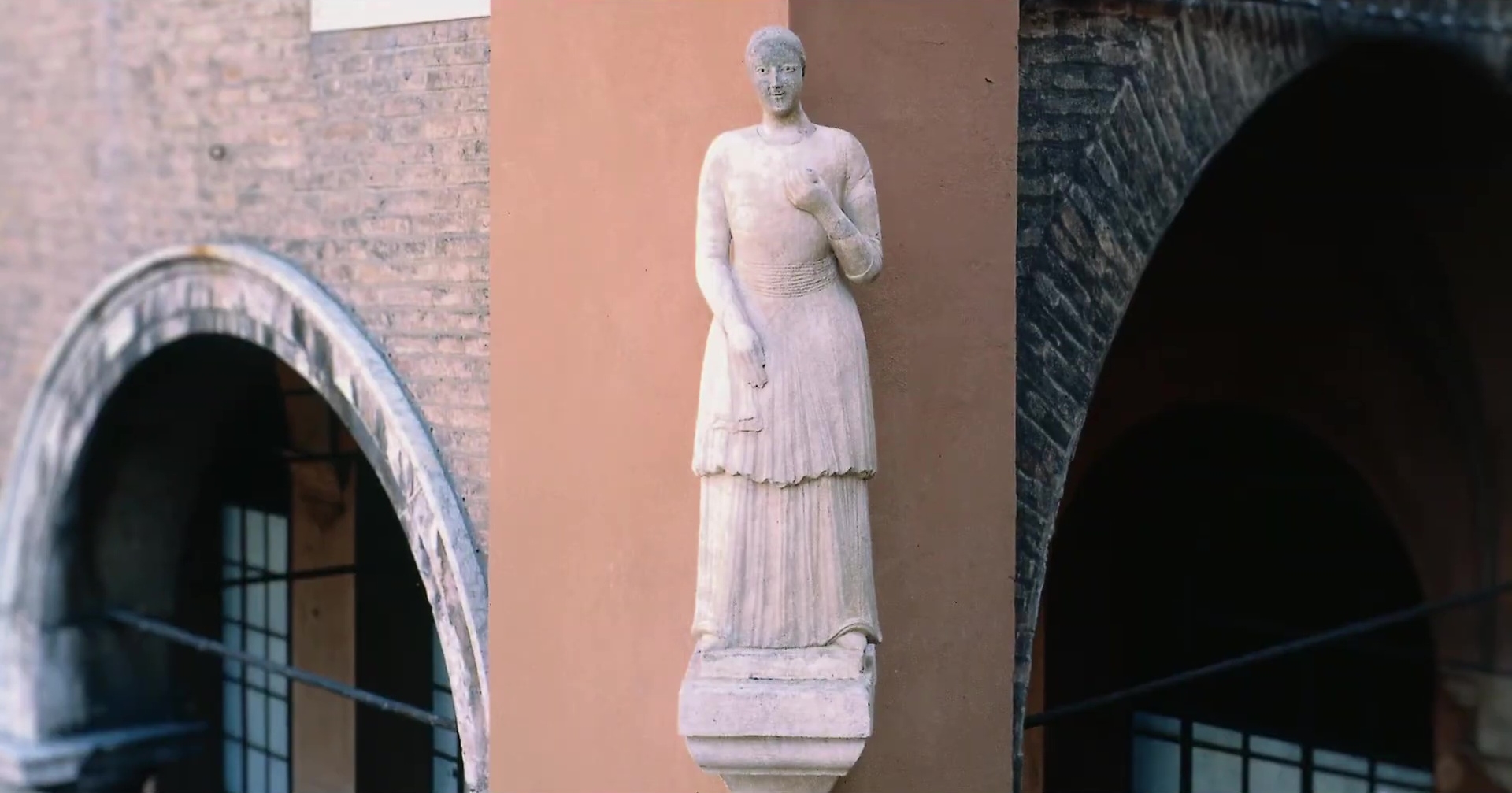
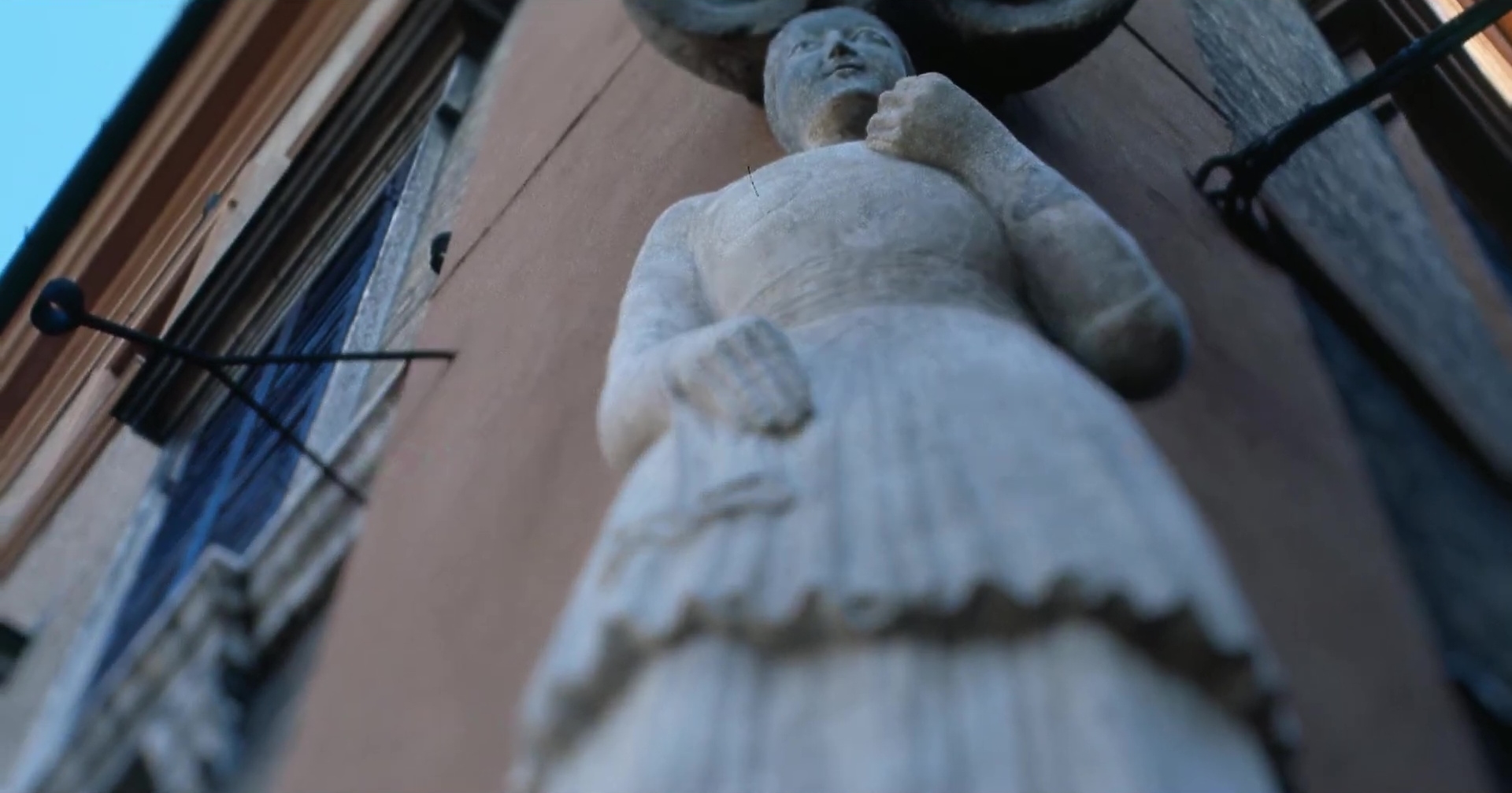
La Bonissima is a singular statue today placed on a pavilion in the corner of the Town Hall of Modena, at the entrance to the ancient Via Castellaro, which depicts a woman wearing a medieval costume and a long braid of flowing hair over her shoulder. The chronology of the Bonissima is not certain, but there is a tendency to date it between the 12th and 13th centuries.
PARTICULAR
THE BEAUTIFUL
Hypothesis for the identification of the girl portrayed in the Modenese statue
First of all, it is well known to the Modenese citizenry for the story that has been circulating for centuries and collected by the Modenese chronicler Jacopo de' Lancellotti in his chronicle under the date 1468, according to which the statue was erected a couple of centuries earlier in honour of a very rich woman named Bonawhich in times of great famine he would lend the citizenry large sums of money for the purchase of abundant wheat.
A second, suggestive hypothesis identifies the Bonissima with the Countess Matilda of Canossawhich had at the time a particular ascendancy and a considerable authority in Modena. In fact, she is used to settle a lively dispute that arose after the translation of the body of San Geminianobetween the bishops who wished to recognise the Saint's relics and the people who opposed this. At Relatio states that the Countess decides to refer the matter to Pope Paschal II and emphasises her generosity.
No figure reminding us of Countess Matilda can be found in Modena Cathedralbut in the Crypt of San Geminiano there is a plaque commemorating the translation that took place in 1106 and the recognition that took place in the same year in the presence of Paschal II and the Grand Countess.
What if a natural person is not portrayed?
Finally, other authors state that the legendary statuette should not refer to an individual, but to a public office of the municipality of which it was an emblematic symbol, i.e. l'Office of Bona Opinionalso called "of the Bills", in front of which it was originally placed.
Further confirmation comes from the fact, well established in the municipal statutes, that "in pede Bonissime"on the slab that is supporting it, were carved out all the merchant measuresThe pitch, the arm, the modus or shape and size of the quadrelli (bricks) and the coppi (tiles), the biada and wine mines and even the soles of shoes.
THE BEAUTIFUL
UNIT OF MEASUREMENT


